Lastest Articles

Monday, July 1, 2013

Somali militants al-Shabab threaten Kenya retaliation

0 comments
Somali militant group Al-Shabab has warned Kenya to withdraw its troops from Somalia, or face bloody battles.Al-Shabab spokesman Ali Mohamud Rage told the BBC Somali service that his fighters would attack Nairobi.
Kenya launched an air and ground assault on the weekend, in response to several recent cross-border abductions it blames on al-Shabab.
The hard-line group, which controls much of southern Somalia, denies carrying out the kidnappings.
Mr Rage said: "We will defend ourselves. Kenya doesn't know war. We know war. The tall buildings in Nairobi will be destroyed.
"We have fought against governments older and stronger than Kenya and we have defeated them."
more.

Sunday, November 6, 2011

Government forces take over Gadhafi stronghold

0 comments

Tripoli, Libya (CNN) -- More symbols of Moammar Gadhafi's rule over Libya began to crumble Monday as forces of the country's new government took over one of the last cities loyal to him while others bulldozed the walls of his Libya compound.
Forces took over the city of Bani Walid on Monday, National Transitional Council military spokesman Abdelrahman Busin said.
Meanwhile, in Tripoli, fighters began bulldozing the outer walls of Gadhafi's Bab al Aziziya compound. Seizure of the compound by then-rebel forces in August marked the end of the regime.
Fighters participating in the effort said they may begin as soon as Tuesday to bulldoze a structure in the compound that Gadhafi called the House of Resistance, his former residence bombed by the United States in 1986 and frequently used as a site for speeches.
The fall of Bani Walid leaves Gadhafi's hometown of Sirte as the focus of military action by Libya's new government.
National Transitional Council forces will bolster their number in Bani Walid as soon as the battle for Sirte is over, Busin said.
As the battle for control of the last Gadhafi outposts continues, the U.N. human rights office expressed concern about the number of prisoners in Libya and their treatment.
"It could be up to 7,000," said Mona Rishmawi, a senior official with the Office of the High Commissioner for Human Rights in Geneva, Switzerland. "At this stage, there is no police infrastructure, there is no prison authorities. ... Right now, the Justice Ministry is not fully functional."
"There is allegations and evidence of torture" in the prisons, she said, citing lawyers, clients and human rights groups.
State Department spokeswoman Victoria Nuland also expressed concern Monday for treatment of prisoners who are "being detained apparently on their skin color and an assumption that they have supported Gadhafi."
"We urge the (National Transitional Council) to honor its stated commitment to the rule of law and respect for the universal human rights of all people in Libya," Nuland said.
more.

If he was captured alive, how did Gadhafi end up dead?

0 comments

The death of longtime Libyan leader Moammar Gadhafi helped solidify the National Transitional Council's power in Libya, but there is still a large amount of uncertainty about the circumstances surrounding how he was killed, what happened during the last battle in Sirte and what it all means for the future of Libya.

When Gadhafi's death was first reported, it came with a large amount of uncertainty.

Multiple scenarios emerged as to how the last minutes of his life played out, thanks to cell phone pictures and videos, many later uploaded to YouTube. Then, there were statements from officials from NATO, from within Libya and from the National Transitional Council about what happened.

And as the country prepares to move on, the international community searches for answers as to exactly what happened in the minutes after Gadhafi was captured.

What exactly do we know about how Gadhafi was captured?

We know that the events leading to Gadhafi's death began about 8:30 a.m. Thursday in Libya, according to a NATO official, when a convoy of loyalists made a break from a part of Sirte and headed west, trying to get out of the city.

Gadhafi had long been suspected of being holed up in his hometown, which was one of the only remaining regime strongholds.

U.S. drones and French fighter jets struck the convoy, splitting it up and forcing the loyalists to scurry away on foot. A NATO official said Gadhafi was in that convoy, though he was not hit.

Gadhafi fled with a handful of his men. The revolutionaries found him hiding in a drainage pipe.

Mahmoud Jibril, Executive Chairman of Libya's National Transitional Council, said that after Gadhafi was found, a gunbattle erupted between transitional council fighters and Gadhafi's supporters. His captors attempted to load him into a vehicle, leaving Gadhafi with a wound to his right arm.

Video out of Sirte showed what appeared to be a heavily wounded and bloodied Gadhafi being held up by NTC fighters as they took him toward a vehicle.

What happened after that is more murky.

What do we know about how Gadhafi died?

When Gadhafi was captured, he was, by all accounts, alive.

Several videos from the scene showed Gadhafi looking wounded and confused but alive and even walking as he was pulled toward a vehicle.

Jibril said Gadhafi was shot in the arm as he was dragged into a vehicle headed to Misrata, a two-and-a-half-hour trip.

But the autopsy report from the chief pathologist said Gadhafi died of a gunshot wound to the head.

So how did Gadhafi go from being captured to being shot in the head?

It depends on whom you ask, and there are many details that simply are not confirmed.

Leaders of Libya's interim government have said Gadhafi was killed in that crossfire after fighters captured him in Sirte.

But videos and pictures coming out of Libya lead to more questions about what shot may have killed the leader.

Some members of the international community had hoped there would be some more clarity from the autopsy report. But the doctor who conducted the examination would not disclose whether findings revealed that he suffered the wound in crossfire or at close range, a key question that has prompted the United Nations and international human rights groups to call for an investigation into the final moments of Gadhafi's life.

Jibril, the transitional prime minister, said that as the vehicle carrying the wounded Gadhafi drove away, more shooting erupted, and that was when Gadhafi was shot in the head.

Mohammed Sayeh, a senior member of the council, said that in the hail of gunfire, Gadhafi was shot in the feet and then in his head.

"I cannot tell you whether it was from far or near, but it was unintentional," he said. "No one decided to kill him or slaughter him. It would have been much better for us Libyans and the whole universe to capture him and take him to a court."

But in a new video from Reuters, a man standing next to an ambulance claims he killed the ousted leader, and another man claims he saw it happen. The group surrounding him applauds and hugs the self-described gunman.

There were no more specifics given about the fatal shot.
All that seems to be clear is that Gadhafi did not have a head wound when he was taken from the drainage pipe.

But when his body showed up at a hospital in Misrata, videos and photos showed a clear bullet wound.


And it is that disparity that has prompted calls for an investigation into the death. However, for some Libyans, how he died isn't so much the issue, Time.com reports. For them, knowing that he is gone is all that matters.

What was NATO's involvement in Gadhafi's death?

We know that NATO had eyes on Sirte, including aerial surveillance in areas where it had seen an uptick in conflict. Gadhafi's forces had been boxed into a particular area in Sirte, NATO said. When a large convoy left that area, the drones and fighter jets struck. It's also the moment when Gadhafi is believed to have fled.

For weeks, the revolutionaries had been on the forefront of the battle for Sirte, struggling to wrest control of the coastal city from the last vestiges of the old regime in brutal urban warfare. Thursday, when the fight was finally won, they could finally claim liberation for their nation.


In the wake of the death, and because of the strike on the convoy, NATO re-emphasized what it has been saying since the mission in Libya began: There was a mission to take out Gadhafi's regime and forces but not to assassinate him.

NATO launched an air and missile campaign in March, when pro-Gadhafi forces were advancing on a rebel stronghold in Libya, under a U.N. mandate to protect civilians. NATO's efforts have included strike sorties and airstrikes targeting Gadhafi's military resources.

NATO began to scale back operations in Libya after Gadhafi's death, with the preliminary end date of October 31, NATO chief Anders Fogh Rasmussen said Friday.

"We did what we said we would do, and now is the time for the Libyan people to take their destiny into their own hands," Rasmussen said.

So, what's next for Libya?

A long road stretches ahead for the Libyan people.

In addition to the investigation into Gadhafi's own death, human rights groups are calling for investigations after they discovered the bodies of 53 people, believed to be Gadhafi supporters, in a hotel that was under the control of anti-Gadhafi fighters.

"We found 53 decomposing bodies, apparently (Gadhafi) supporters, at an abandoned hotel in Sirte, and some had their hands bound behind their backs when they were shot," said Peter Bouckaert, emergencies director of Human Rights Watch.

Officials with the National Transitional Council were not immediately available for comment. The report comes amid growing concerns about extrajudicial killings under Libya's new leadership.

As Libya closes one chapter in their storied history, it will now begin to try to shore up its future, including answering the concerns about extrajudicial killings.

It will also have to make the transition from a war-torn country into a new society and building or creating all of the foundations to do so.

"The formal timetable laid down by the NTC begins with the declaration of liberation," said Ian Martin, the U.N. special representative for Libya. "The clock begins ticking, and we'll be working with them to try to make their commitments feasible in practice."

That will begin with elections, which leaders have said will take place in the current months. The first vote will be for a National Congress that will draft a constitution. After that, parliamentary and presidential elections will be held, National Transitional Council leaders said.

There will also be the issue of what will happen with what some analysts believe to be as much as $150 billion in frozen assets that had been available to the Gadhafi regime around the world. Even before Gadhafi's death, the U.S. Treasury Department had started thawing $37 billion worth such assets to make them available to the new government in Tripoli.

And then there will be the state of Libya's oil production. It is estimated that 350,000 barrels of oil per day are being produced by Libya.

World leaders offered the new Libya words of encouragement tempered with caution.

"In the coming days, we will witness scenes of celebration, as well as grief for those who lost so much," U.N. Secretary-General Ban Ki-moon said. "Yet let us recognize, immediately, that this is only the end of the beginning. The road ahead for Libya and its people will be difficult and full of challenges."
more.

How soon can Libya get its oil to flow?

0 comments

With former Libyan leader Moammar Gadhafi ousted and dead, Libya’s interim government seems confident the country can reach pre-war oil production levels soon. But not everyone is so optimistic.

Before the February uprising, Libya put out about 1.6 million barrels of oil each day. That’s 2% of the world’s daily oil production.

The oil stopped flowing during the civil war as foreign companies left without properly shutting down the oil infrastructure. It is estimated Libya is now producing about 350,000 barrels of oil per day, but Libya’s new leaders are anxious to get more oil flowing.

Some oil companies that operated wells and refineries in Libya before the war “expressed some skepticism regarding a restoration of production to full pre-war levels within the next six months,” according to Fadel Gheit, managing director of oil and gas research at the Oppenheimer & Co. investment bank and firm.

“Obviously, the whole country is in shambles … civil war, total anarchy. Nobody is in control,” Gheit said. “So it’s not, obviously, a situation that will encourage oil companies to hurry back to Libya anytime soon.”

Gheit said because European oil companies left Libya so quickly during the uprising, they didn’t place the drills and refineries in a state that would make them easy to start up again. In some cases, wells will have to be re-drilled.

The new leaders of Libya will have to invest in the dilapidated oil infrastructure to maximize production and increase the nation’s revenue. But their limited funds are also needed to rebuild the country in the wake of intense fighting. If they spend too much on one, they may not be able to get the other done.

Click the audio player to hear the rest of the story from CNN Radio's Steve Kastenbaum:
more.

Security Council removing mandate for Libya military action

0 comments

[Updated at 12:01 p.m. ET] The U.N. Security Council adopted a resolution Thursday removing its mandate for military intervention, effectively ending the NATO mission in Libya, as of October 31.

Last week, senior NATO officials agreed to a preliminary end date of October 31 for the alliance's seven-month Libya mission. NATO ministers gave preliminary approval to that plan.

But U.S. Defense Secretary Leon Panetta said this week that Libya's National Transitional Council wanted NATO to stick around until it could establish governance.

However, Libyan Deputy Ambassador Ibrahim Dabbashi told the 15-member council Wednesday that the Libyan people were looking forward to ending the NATO mission.

While Libyans were grateful for the international community's support, he said, such measures felt like an infringement of Libya's sovereignty.

The Security Council in March passed a resolution mandating the protection of Libya's civilian population as military forces loyal to Libyan leader Moammar Gadhafi advanced on a rebel stronghold in eastern Libya. Within days of the Security Council's decision, NATO forces were engaged in action by air and sea.

The operation relied on three main prongs - implementing a no-fly zone, enforcing an arms embargo and taking action to protect civilians and civilian areas under threat of attack.

Since March 31, some 9,634 strike sorties, where targets are identified or hit, are among 26,000 sorties to have been conducted, NATO said Friday.
more.

ICC in talks over surrender of Gadhafi son

0 comments

The International Criminal Court is having "informal conversations" about the surrender of Moammar Gadhafi's son, Saif al-Islam, who is wanted for crimes against humanity, the court's chief prosecutor said Friday.

Luis Moreno-Ocampo would not say with whom the court is having conversations. He also said the court does not know al-Islam's whereabouts.

If Saif al-Islam Gadhafi is brought before the court, Moreno-Ocampo said, he will "have all the rights and be protected," and will be allowed to present his defense

"We believe we have a strong case," the prosecutor told CNN in an exclusive interview from The Hague. "We believe he should be convicted."
Do Libyans care who killed Gadhafi?
The court believes Saif al-Islam Gadhafi, his father, and his brother-in-law Abdulla al-Sanussi are responsible for crimes against humanity in Libya, including murder and persecution across the country beginning in February amid anti-government demonstrations, Moreno-Ocampo said.
Al-Sanussi served as the head of intelligence for Moammar Gadhafi, who was captured by opposition fighters and killed last week.
Moreno-Ocampo promised there would be no deals for Saif al-Islam Gadhafi's surrender.
more.

NATO ending Libya mission

0 comments

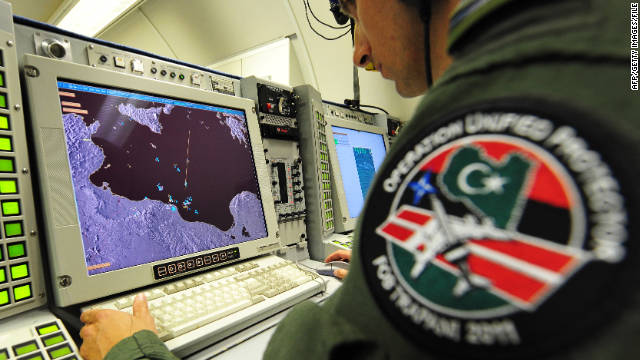
Tripoli, Libya (CNN) -- More than seven months after the U.N. Security Council authorized NATO forces to protect demonstrators in Libya, the aerial bombing campaign operation that helped depose longtime leader Moammar Gadhafi ended here Monday at midnight.
"I think what has happened in Libya sends a very clear signal to autocratic regimes all over the world," NATO Secretary-General Anders Fogh Rasmussen told reporters earlier in the day after arriving in Tripoli from Brussels, Belgium.
"We have been mandated by the United Nations Security Council to protect civilians and that mission has been a great success," he told CNN during the flight. "We have prevented a massacre. We have saved countless lives. We have fully implemented the United Nations mandate. That was our mission and we have done what we promised to do."
But the Pentagon said Monday that the United States will continue monitoring Libya from the skies even after the end of formal NATO military operations.
"There will be some kind of overwatch role for a little while after the actual end," Pentagon spokesman, Capt. John Kirby said. "We are still working with our NATO allies on that." U.S. manned and unmanned aircraft played a key reconnaissance role in the Libya operation even after U.S. forces stopped taking the lead combat role.
And National Transitional Council spokesman Ahmed Bani told CNN that he was expecting the mission would be suspended rather than canceled. "To cancel it, in these circumstances, I don't think was the right decision, especially at this time," he said, citing the continued presence of pro-Gadhafi elements.
Interim prime minister chosen
NATO's move comes after the United Nations Security Council last week rescinded its March mandate for military intervention to protect civilians targeted during anti-regime protests.
NATO mission in Libya ends Gadhafi's fugitive son may surrender Do Libyans care who killed Gadhafi? Terror victims seek justice
Susan Rice, the U.S. ambassador to the United Nations, said NATO's mission puts Libya on a path to freedom.
But she tempered her remarks with a word of caution.
"We're very concerned that, as we move forward, that the authorities make maximum effort to swiftly form an inclusive government that incorporates all aspects of Libyan society, and in which the rights of all Libyan people are fully and thoroughly respected, regardless of their gender, their religion, their region of origin," Rice said after the Security Council vote last Thursday.
"But for the United States, and, I think, for the United Nations Security Council, this closes what I think history will judge to be a proud chapter in the Security Council's history."
As of Monday, Operation Unified Protector had flown 7,943 total sorties, 1,851 strike sorties and 398 total strikes in which ordnance was dropped.
Momentum to end the campaign began building after Gadhafi was killed following his capture near his hometown of Sirte on October 20.
Many British military personnel who had been stationed at an Italian airfield for the campaign already are returning home.
Meanwhile, Gadhafi's relatives said they plan to file a war crimes complaint.
"All of the events that have taken place since February 2011 and the murder of Gadhafi, all of this means we are totally in our right to call upon the International Criminal Court," Marcel Ceccaldi, a lawyer representing the family, said last week.
Questions have been raised about how Gadhafi was killed.
Amateur videos showed him alive when captured by the opposition. He died from a shot in the head, officials said, but the circumstances surrounding the shot remain unclear.
NATO's Libya campaign began in March, after the Security Council adopted Resolution 1973, which imposed a no-fly zone in the country's airspace and authorized member states to take measures to protect civilians.
more.

HRW: Militias terrorizing Libyans accused of working with pro-Gadhafi forces

0 comments

Militias from the Libyan city of Misrata have beaten and killed displaced residents from the nearby town of Tawergha, accusing them of siding with pro-Gadhafi forces and committing violent crimes in Misrata, according to a report by Human Rights Watch.

The rights group said Sunday it interviewed dozens of Tawerghans across the country, including those detained or displaced.

"They gave credible accounts of some Misrata militias shooting unarmed Tawerghans, and of arbitrary arrests and beatings of Tawerghan detainees, in a few cases leading to death."

CNN could not immediately verify the claims.

Local authorities and Misrata residents widely accuse Tawerghans of having committed serious crimes - including murders and rapes - in Misrata with forces loyal to ousted Libyan leader Moammar Gadhafi, Human Rights Watch said.

The group said pro-Gadhafi forces used Tawergha as a base for attacks on Misrata and the surrounding area from March until August. Many Tawerghans supported the 42-year ruler, whose regime claimed that Libyan opposition fighters would enslave Tawerghans if they took power, Human Rights Watch said.
more.

Transitional government prefers to try Gadhafi son in Libya

0 comments

Libya's transitional government would prefer to try former leader Moammar Gadhafi's son Saif al-Islam in a Libyan court despite an arrest warrant issued for him by the International Criminal Court, a spokesman said Sunday.

The court's chief prosecutor said Friday it was having "informal conversations" about the surrender of Saif al-Islam Gadhafi, who is wanted for crimes against humanity. But Luis Moreno-Ocampo said the court did not know his whereabouts and would not reveal with whom the court is talking.

Saif al-Islam Gadhafi has realized there is no escape, and wants to negotiate a surrender to limit the damage, said Anees al-Sharif, spokesman for the National Transitional Council's Tripoli Military Council.
more.

NATO to officially end Libya mission

0 comments

After seven months of an aerial bombing campaign that helped depose longtime ruler Moammar Gadhafi, NATO officially ends its mission in Libya on Monday.

NATO's move comes after the United Nations Security Council last week rescinded its March mandate for military intervention to protect civilians targeted during anti-regime protests.

"Libyans have now liberated their country. And they have transformed the region," said NATO Secretary-General Anders Fogh Rasmussen on Friday. "This is their victory."

"Our operation for Libya will end on October 31. Until then, together with our partners, we will continue to monitor the situation. And if needed, we will continue to respond to threats to civilians," Rasmussen said
more.

U.N. officials visiting Libya

0 comments

The United Nations secretary-general and the president of the U.N. General Assembly arrived in Tripoli, Libya, on Wednesday, according to a U.N. statement.

Ban Ki-moon and Nassir Abdulaziz Al-Nasser of Qatar, General Assembly president, will meet with members of Libya's National Transitional Council and others, the statement said. The two will also meet with reporters.

Ban will travel to Cannes, France, Wednesday night, according to the U.N. More details on Ban and Al-Nasser's visit will be provided later Wednesday, the statement said
more.

Obama tackles drug shortages, prices

0 comments

President Barack Obama will sign an executive order Monday designed to help reduce a growing number of prescription drug shortages while protecting patients from possible pharmaceutical industry price gouging.

Among other things, the order requires the Food and Drug Administration to increase its reporting of possible shortages of certain prescription drugs, while also speeding up regulatory reviews of new drug manufacturing sites, drug suppliers and manufacturing changes.

The Justice Department will be tasked with examining whether specific drug shortages are tied to an intentional stockpiling of medications designed to raise prices.
more.

Ahead of the curve: the next 7 days

0 comments


A shuffle of Greece's government and questions over how it will deal with its debt – which could drag down larger European economies – will be in a spotlight this week as the country's prime minister prepares to resign. Here is a look at this and some other stories CNN plans to follow this week.

Greece dealing with government shakeup, questions about debt

Greek Prime Minister George Papandreou is expected to resign this week after the makeup of a new coalition government is decided. He narrowly won a confidence vote last week after announcing he would seek a new government, and he's agreed to resign – after talks with the opposition – on the condition that a controversial 130 billion euro bailout deal is approved.

Papandreou found himself in turmoil when he announced he would put a European bailout package for his country – a deal that would slash half of Greece’s 100 billion euro debt – to a referendum. He later backed off the referendum, and he says implementing the package is a priority, but the fate of the deal still isn’t clear.

The bailout deal, reached October 26, comes with strings that would require Greece to slash government jobs, privatize some businesses and reduce pensions. If Greece ever were to decide it doesn’t want to meet those conditions, it could decide to default.

A Greek default could drag down larger European economies, in particular those of Italy and Spain, as well as struggling Portugal and Ireland, analysts warn.

The new government will have a life of four months, according to Greek television, and elections will be held in early spring. Papandreou and main opposition leader Antonis Samaras will meet Monday to discuss who will be Greece's next prime minister and who will be part of the new government, according to a statement released Sunday night by the office of Greek President Karolos Papoulias.

Mississippi 'personhood' vote could affect abortion, birth control rules in state

Mississippi residents on Tuesday will vote on whether to amend the state constitution to define fertilized human eggs as a person. If passed, the measure likely would render abortions illegal in the state and hamper the ability to get some forms of birth control, such as the morning-after pill.

Initiative 26 – also known as the Personhood Amendment – would define personhood as "every human being from the moment of fertilization, cloning or the functional equivalent thereof."

Anti-abortion forces hope the amendment, if passed, would ultimately be appealed to the U.S. Supreme Court, providing another opportunity for the justices to overturn the landmark Roe v. Wade decision legalizing abortion.

Besides a likely effect on abortions, the measure also could make in vitro fertilization treatments more difficult because it could become illegal to dispose of unused fertilized eggs.

Opponents of the measure argue that, among other things, it would give government too much control over women's reproductive rights, and that it could have unintended consequences. An area of particular concern for opponents is that it doesn't provide exceptions for a victim of rape or incest who wishes to terminate her pregnancy. Some anti-abortion religious groups say it could lead to a Supreme Court ruling that actually strengthens Roe v. Wade.

Also on Election Day: Two gubernatorial races

We're a year away from presidential and congressional elections, but this year's Election Day will feature gubernatorial races in Mississippi and Kentucky.

In Mississippi, Republican nominee Phil Bryant, the state's lieutenant governor, will face Democratic nominee Johnny L. Dupree, the mayor of Hattiesburg and the first black candidate to win a statewide primary nomination.

In Kentucky, Gov. Steve Beshear, a Democrat, is seeking re-election against state Sen. David L. Williams, a Republican.GOP presidential candidates debating twice in four days

Republican candidates for U.S. president will have two debates this week – on Wednesday at Michigan's Oakland University, and on Saturday at South Carolina's Wofford College.

A national poll released last week showed GOP candidate Mitt Romney, a former Massachusetts governor, virtually tied with President Barack Obama in a hypothetical contest for the presidency.

While businessman Herman Cain now polls closely with Romney in national surveys on the GOP nomination, Cain didn't fare as well in a potential matchup with Obama. According to the Reuters/Ipsos National Poll, Obama holds a 46-41 edge over Cain, and a 47-41 advantage over Texas Gov. Rick Perry.

The poll was conducted after news broke of sexual harassment allegations against Cain when he led the National Restaurant Association in the late 1990s.

The bid of another GOP candidate, former House Speaker Newt Gingrich, appears to be on the rise. According to a poll by ABC News and the Washington Post last week, 12% of Republicans and independents who lean toward the GOP say they support Gingrich for the GOP nomination – up 5 points from one month ago. Gingrich is in fourth place in the new poll, 1 percentage point behind Texas Gov. Rick Perry. Gingrich was in third place at 10% support in a Quinnipiac University national poll released Wednesday, up 7 points from late August.

Diplomats: IAEA to detail Iran's efforts to develop nuclear weapon

In a report to be released early this week, the International Atomic Energy Agency will make the most detailed charges to date that Iran's nuclear program is geared toward weapons development and military use, several Western diplomats briefed on the report told CNN.

The diplomats said that the report will include more data than the organization has previously released on clandestine efforts by Iran to develop technologies to build a nuclear weapon, including computer models of a nuclear warhead. They argue the IAEA studies offer no other explanation for those efforts beyond Iran seeking to develop a nuclear weapon.

Although previous IAEA reports have cited concerns by the organization that Iran has been seeking to develop nuclear warheads and ballistic missiles to deliver them, the diplomats said the upcoming report is expected to make the charges more explicitly. The United States and other Western powers suspect Iran's nuclear program is geared toward weapons development, although Tehran insists its program is for peaceful purposes.

The Obama administration has downplayed speculation that the United States and Britain are weighing a military strike against Iranian nuclear facilities, saying U.S. officials are focused on a diplomatic strategy. However, some officials say privately the U.S. military and intelligence community is growing increasingly concerned that Israel could be preparing such a strike and are monitoring both Israel and Iran closely.

Carlos the Jackal on trial in connection with '80s bombings

A man who once was one of the world's most wanted fugitives is expected to go on trial Monday in connection with fatal bombings in France in the early 1980s.

Carlos the Jackal, a Venezuelan whose real name is Illich Ramirez Sanchez, is accused of complicity in the bombings that killed 11 and injured more than 100 people in France in 1982 and 1983.

Ramirez, who was a member of the Popular Front for the Liberation of Palestine, already is serving a life sentence in Paris for the murders of two French secret agents and an informer in 1975. He also was involved in an assault during an OPEC meeting in Vienna 1975; the raid resulted in 70 hostages being taken, including 11 oil ministers.

He was captured in Sudan in 1994 and brought to France, where he was convicted of the 1975 slayings in 1997.

Obama expected to see MSU-UNC game on carrier

President Obama is expected to be in attendance when Michigan State and North Carolina meet for the first college basketball game to be played on an aircraft carrier.

The two teams are scheduled to play Friday – Veterans Day – aboard the USS Carl Vinson at pier side at the San Diego Naval Base. On hand will be honorary captains James Worthy, a UNC alumnus, and Magic Johnson, who went to Michigan State.

About 7,000 fans will be able to see the event in person. The game is scheduled to be carried live on ESPN.

Asteroid to pass closer to earth than moon

An asteroid the size of an aircraft carrier will pass Earth to within eight-tenths of the distance of the moon - the closest approach to Earth of an object this size in over 30 years.

The asteroid poses no threat of an Earth collision for at least the next 100 years, according to NASA’s Near Earth Object Program. But scientists will be interested in the pass, in part because it is a rare opportunity for amateur astronomers to directly observe an asteroid with optical telescopes.

NASA plans to study the asteroid with Goldstone radar antennas in California’s Mojave Desert. Scientists will use the antennas to map the asteroid's shape with a resolution as fine as 13 feet. Several days of high resolution operations are also scheduled at the Arecibo Observatory in Puerto Rico.
more.

With execution clock ticking, supporters of Texas inmate press for DNA testing

0 comments


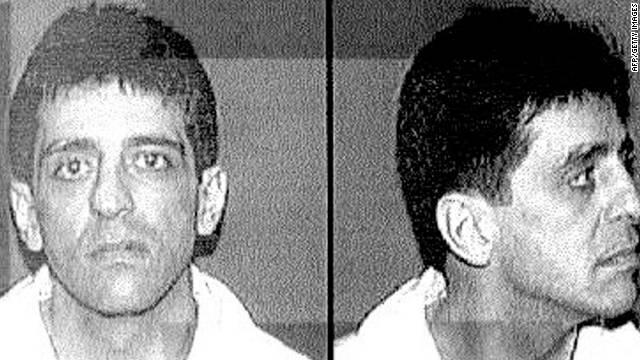
(CNN) -- Henry "Hank" Skinner came within 45 minutes of lethal injection in March 2010 before the U.S. Supreme Court stepped in -- and ultimately handed him a legal reprieve.
But as another execution date looms, pressure is mounting on Texas officials to grant Skinner's long-standing request to have crime-scene DNA tested before it's too late.
"Executing Mr. Skinner without testing all the relevant evidence would suggest official indifference to the possibility of error in this case and needlessly undermine public confidence in Texas's criminal justice system," said a letter from former Texas Gov. Mark White and 16 other current and former Texas lawmakers, prosecutors and judges, dated October 27 and sent to Gov. Rick Perry, Attorney General Greg Abbott and Gray County District Attorney Lynn Switzer.
Skinner, 49, was convicted of the New Year's Eve 1993 killings of his 41-year-old live-in girlfriend, Twila Busby, and her two adult sons in the Texas Panhandle town of Pampa. He is set to die Wednesday.
He has strongly denied any involvement in the crime and claims that the DNA analysis of untested evidence will prove his innocence and help determine the real killer.
"All the district attorney has got to do is turn over the evidence and test it, and let the chips fall where they may," Skinner told CNN's Kate Bolduan in 2009 in an interview from death row at the Polunsky Correctional Institution in Livingston, Texas. "If I'm innocent, I go home. If I'm guilty, I die. What's so hard about that?"
On Thursday, the Texas trial court denied Skinner's latest motion asking to have the crime scene items tested.
"We are deeply disappointed that the trial court has denied Mr. Skinner's request for DNA testing," Rob Owen, Skinner's attorney, said in a statement. "Unfortunately, the trial court's order offers no explanation for its conclusion that DNA testing is not called for in this case."
The case will now go to the Texas Court of Criminal Appeals, Owen said, adding that he is confident the court will give the case "deliberate consideration. ... We are confident that upon such careful review, the court will conclude that DNA testing is necessary in this case to ensure the reliability of the verdict.
"But for now, the Court of Criminal Appeals must stop the scheduled November 9 execution rather than allow itself to be rushed to a hasty and ill-considered decision," Owen said. "The stakes in this case are too high to allow Mr. Skinner to be executed before he has a fair chance to make his case that the trial court made a grave mistake in denying his request for DNA testing."
The Court of Criminal Appeals is Texas' highest criminal court.
Owen said he is asking the Court of Criminal Appeals to ask the trial court to provide more information on why it made its ruling. A federal case in which Skinner is also seeking the testing has been put on hold pending the outcome of the state court proceedings, he said. If the Court of Criminal Appeals denies Skinner's motion, the federal court case will proceed.
Texas state attorneys argued at a recent court hearing that the testing should not be conducted because there was not a reasonable probability the trial jury would have found Skinner innocent if the testing had been done for his trial, Owen said.
Switzer's office refused comment on the case to CNN on Thursday. Perry's office referred questions to the attorney general's office, which also denied comment.
More than 120,000 people have signed an online petition calling for the testing.
In May 2010, after halting Skinner's execution in March of that year, the Supreme Court said on a 6-3 vote that Skinner has a basic civil right to press for DNA analysis, giving him another legal avenue to push his claims of innocence.
At the time, Justice Ruth Bader Ginsburg noted that Skinner's victory was limited and that the ruling only gave Skinner access to the DNA evidence, which might point to his innocence, point to his guilt or be deemed inconclusive.
However, Texas prosecutors have fought the testing, claiming that Skinner is not entitled to testing of evidence not analyzed before his 1995 trial. Forensic evidence gathered at the scene, as well as witness statements, points to Skinner as the killer, they maintain.
Skinner admits being at the crime scene when Busby and her sons died but said he was passed out on the couch from a combination of vodka and codeine and was too intoxicated to have committed the murders.
A female friend of Skinner's who lived four blocks away testified at his trial that he walked to her mobile home and told her that he may have kicked Twila Busby to death, although evidence did not show she had been kicked. The neighbor has since recanted parts of her testimony.
Authorities followed a blood trail from the crime scene to the female friend's home and found Skinner in the closet, authorities said. He was "wearing heavily blood-stained jeans and socks and bearing a gash on the palm of his right hand," according to the Texas attorney general's summary of the case.
Authorities said cuts on Skinner's hand came from the knife used to stab the men. Skinner claimed he cut it on glass. Some DNA testing was done, which implicated Skinner, but not on the items he now wants tested.
In addition to Twila Busby, also found stabbed to death were her sons Elwin "Scooter" Caler, 22, and Randy Busby, 20, both of whom were developmentally disabled.
"The victims' injuries show that whoever murdered them must have possessed considerable strength, balance and coordination," Owen wrote in the Supreme Court filing. Twila Busby was manually strangled so forcefully that her larynx and the hyoid bone in her throat were broken. She then was struck with an ax or pick handle 14 times, hard enough to drive fragments of her "unusually thick skull" into her brain, the court documents said.
"While attacking Ms. Busby, the perpetrator had to contend with the presence of her six-foot-six-inch, 225-pound son, Elwin Caler, who blood spatter analysis showed was in the immediate vicinity of his mother as she was being beaten," the court filing said.
"Somehow, the murderer was able to change weapons and stab Caler several times before he could fend off the attack or flee."
Among the items Skinner wants tested, according to court documents, are vaginal swabs from Busby contained in a rape kit; clippings from her fingernails; two knives, one found on Busby's front porch and the second found in a plastic bag in the living room; a dish towel; and blood and hairs from a jacket found next to Busby's body.
Skinner's attorneys have in the past presented what they call compelling evidence pointing to another man who may have committed the murders. Evidence presented at trial suggested that Busby's uncle, Robert Donnell -- who is now dead -- could have been the killer. At a New Year's Eve party she attended for a short time on the last night of her life, Donnell stalked her, making crude sexual remarks, according to trial testimony. A friend who drove her home from the party testified that she was "fidgety and worried" and that Donnell was no longer at the party when the friend returned to the celebration.
Sandrine Ageorges-Skinner, a Frenchwoman who married Skinner in 2008, told CNN's "Larry King Live" in March 2010 that she began writing to him in 1996, and they began visiting in 2000. Ageorges-Skinner has been an outspoken anti-death penalty advocate and a key ally in her husband's struggle.
"I'm convinced of his innocence ... (because) there is scientific forensic evidence to prove that he was not even in a state to stand up at the time of the crime, let alone murder three people that he loved," she told "Larry King Live." "There is absolutely no motive."
Ageorges-Skinner said Thursday that she was not surprised by the trial court's ruling.
"What can you expect from a sentencing judge who has signed four death warrants, denied two previous DNA motions and denied all (Skinner's) appeals?" she wrote in an e-mail to CNN. "This is not justice. When sentencing judges are expected to review their own work and decisions, one cannot expect a fair and impartial decision."
In an interview aired Thursday by France Info, a news radio channel, Ageorges-Skinner said the last few years have been "with the stress and anguish, very intense ... with moments of hope, since he had a new execution date. ... Also moments of laughter, moments of relaxation, because life is too short and you can't forget to live."
A documentary is set to air on the French television network Canal Plus on Tuesday, she told France Info. It was filmed last year, when a camera crew followed her in the days before Skinner was set to die.
"I try not to look at the calendar, even though every morning when I wake up, I know how many days are left," Ageorges-Skinner said at one point, according to excerpts of the documentary posted on Canal Plus' website. At another point, she reads a letter from Skinner telling her he does not want her to witness his execution because "I want you to remember me as I was in life, laughing, joking and talking."
Ageorges-Skinner told France Info that she has been barred from visiting her husband by prison administrators "because we both are exposing problems of incarceration."
Michelle Lyons, spokeswoman for the Texas Department of Criminal Justice, said Ageorges-Skinner was banned from her husband's visitation list a couple of years ago because of "security issues." Skinner was found in possession of a cell phone, she said, and his wife was taken off the list after some "unauthorized money exchanges around the same time."
Ageorges-Skinner will be allowed to visit her husband as his execution date approaches, Lyons said.
Ageorges-Skinner, however, said Sunday that she was banned six months before the cell phone incident. She said she was accused of facilitating trafficking between Skinner and another inmate by sending money to a prison account.
An investigation found no proof of trafficking or violations, she said, and the funds were credited to the inmate's prison account, but the ban stands. She said she appealed, but was rejected.
Texas has executed more prisoners than any state since 1976, when the high court allowed executions to resume.
Questions have swirled in Texas regarding the 2004 execution of Cameron Todd Willingham for a fire that killed his three daughters and claims that he was not guilty.
In 2009, Perry issued a posthumous pardon for Timothy Cole, who was serving a 25-year sentence for aggravated sexual assault when he died in prison from an asthma attack. After his death, DNA tests established his innocence, and another man confessed to the crime.
"We believe that the death penalty is an appropriate punishment for certain crimes, and we understand that the DNA testing might well show that Mr. Skinner is deserving of that punishment," said the letter from lawmakers to the Texas officials. "But we are also steadfast in our belief that when it comes to the ultimate penalty, we must to everything in our power to ensure certainty before taking the irreversible step of carrying out an execution."
The letter notes October's exoneration of Michael Morton after 25 years of wrongful imprisonment. That case "highlights why state officials should consent to DNA testing when untested evidence is available," the letter said.
"There is simply no justifiable reason why Texas continues to waste taxpayer dollars in its decade-long fight to prevent scientific testing in Mr. Skinner's case."
The Texas Criminal Court of Appeals initially determined that the evidence was not tested at Skinner's trial because of the strategy of his trial attorneys -- which the court determined did not meet the no-fault provision of Texas law, which then stated that inmates could access post-conviction testing only if the testing was not done through no fault of the defendant. That "no fault provision" was stripped from state statutes in June.
Busby's family has also pressed state officials to do the forensic testing, saying it would end the years-long delay while Skinner has pressed his legal claims. The family, including Busby's surviving daughter, believes Skinner is guilty.
more.

Oklahoma Rattled by 23 Quakes, Including the Strongest Ever Felt in the State

0 comments
Oklahoma Rattled by 23 Quakes, Including the Strongest Ever Felt in the StateUsually, the earth-moving events on an autumn weekend in Oklahoma are at the college football stadiums in Norman and Stillwater
But on this Saturday and Sunday, the earth moved — at least 23 times — and football was not involved.

The quakes, powerful by Midwestern standards, shook towns about an hour’s drive northeast of Oklahoma City. They began early Saturday and continued intermittently through the weekend.

Late Saturday night, the area experienced the strongest earthquake ever recorded in the state. No serious injuries were reported, but minor damage to roads and buildings was reported, according to the Sheriff’s Department in Lincoln County, the epicenter for many of the quakes.

Geological activity in the region has increased in recent years, and earthquakes have occurred with greater frequency and intensity. The big quake on Saturday night, which occurred at 10:53, had a preliminary magnitude of 5.6, according to the National Earthquake Information Center, a division of the United States Geological Survey.

The Geological Survey said Saturday night’s quake was shallow, about three miles deep, and that the epicenter was four miles east of Sparks, which is about 44 miles northeast of Oklahoma City.

That quake followed smaller ones earlier in the day, including one at 2:12 a.m. with a preliminary magnitude of 4.7. Its epicenter was in Prague, about 50 miles east of Oklahoma City.

Since mid-2009, the state has had 10 times more earthquakes than normal, said Austin Holland, a research seismologist with the Oklahoma Geological Survey. In 2010, the earth beneath Oklahomans’ feet moved more than 1,000 times, but only 100 or so were strong enough to be felt.

“We have not a clue,” Mr. Holland said of the increase. “It could be a natural cycle; we just don’t know.”

Unlike earthquake-prone California and Japan, Oklahoma does not rest atop the fractious areas where two tectonic plates rub against each other. But the state’s geophysical activity has only been surveyed in earnest for about 50 years, Mr. Holland said, making it difficult to draw conclusions or put the recent activity into context.

But the state does have faults that are buried deep, like the Wizetta Fault, also known as the Seminole Uplift, east of Oklahoma City, where pressure can build.

“You still get earthquakes within the plate. That doesn’t mean there’s a plate boundary, but there’s a fault,” said Don Blakeman, a geophysicist at the National Earthquake Information Center.

That pressure is released as tremors like those that startled residents over the weekend in Prague, Okla., where the visible damage on Sunday morning included chimneys that had collapsed onto houses. In a house on North Road, a china cabinet was emptied of its contents, which were smashed, Mr. Holland said. Parts of Highway 62 between Prague and Meeker buckled, he said.

In Lincoln County, cracks ran up the brick courthouse in Chandler after a smaller quake early Saturday morning, said Justin Reese, who runs the Boomarang Diner there.

Since the Saturday night quake, there have been 11 aftershocks that measured above 2.5 on the Richter scale, Mr. Blakeman said.

Mr. Holland said the intensity of the Oklahoma earthquakes “could go either way.”

But this being Oklahoma, the football fans in Norman and Stillwater were not to be outdone by any earthquake on Saturday.

In Norman, the University of Oklahoma Sooners beat the Aggies of Texas A&M, 41 to 25, and in Stillwater, the Oklahoma State Cowboys defeated the Kansas State Wildcats, 52 to 45.
more.

Wednesday, October 19, 2011

Sheriff, expert defend killings of freed animals in Ohio

0 comments
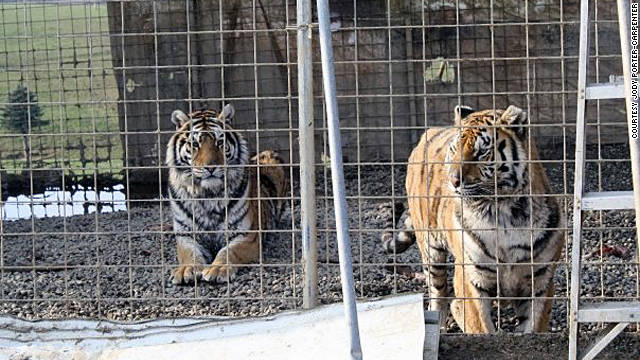
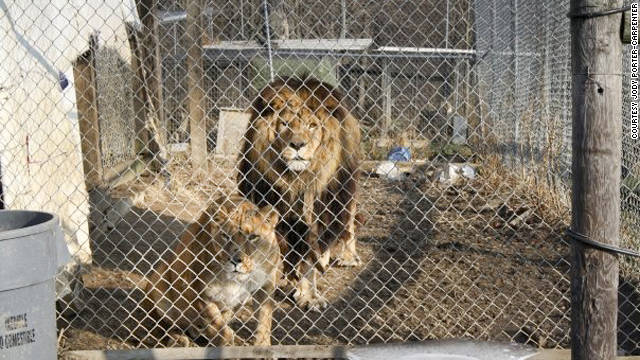
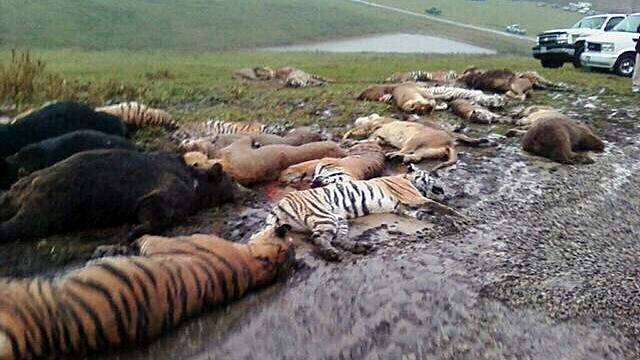
An Ohio sheriff defended the killings of more than four dozen lions, tigers and other wild animals Wednesday after they were turned loose from a farm outside Zanesville by its suicidal owner.
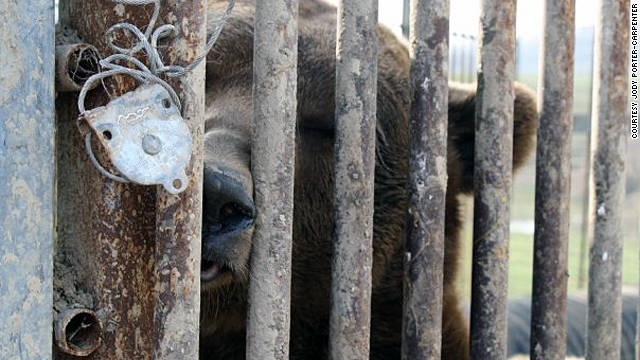
Of the 56 animals released Tuesday night, only a grizzly bear, two monkeys and three leopards were taken alive, Muskingum County Sheriff Matt Lutz said. One monkey remained unaccounted for Wednesday night, but Lutz and conservationist Jack Hanna, who assisted in the effort, said the animal may have been eaten by one of the big cats.
Lutz told reporters earlier that the farm's owner, Terry Thompson, pried open cages and left the farm's fences open before dying from a self-inflicted gunshot wound Tuesday afternoon. Lutz told CNN's "Anderson Cooper 360" that none of his deputies are equipped with tranquilizer guns. And with night falling Tuesday, he gave the order to kill the escaped animals
"If this had been a 9 o'clock or 10 o'clock incident, in the middle of the day, odds are high that we may have been able to surround the area and keep everything contained," he said. "But our biggest problem that we had was nightfall. We had about an hour, hour and a half of light, and we just couldn't take the chance.
As of Wednesday afternoon, authorities had killed 49 animals -- 18 tigers, 17 lions, six black bears, two grizzly bears, three mountain lions, two wolves and a baboon. Those captured alive were taken to the Columbus Zoo.
Hanna, the zoo's director emeritus, said he was upset by loss of "precious" animals, but defended the decision to use deadly force.

"To have no one hurt or killed here with 40-something animals getting loose is unbelievable," he told CNN's "The Situation Room."
Hanna led a team of experts who arrived with four tranquilizer guns late Tuesday in an effort to corral the animals. He said the drugs take several minutes to subdue an animal even with a good shot, and one tiger had to be killed Wednesday afternoon when it turned on a veterinarian after being hit with a tranquilizer dart.
Overnight, sheriff's deputies searched the eastern Ohio woods around Zanesville with night-vision gear and patrolled in pickups, armed with shotguns. Flashing signs on the highways in eastern Ohio warned motorists Wednesday: "Caution. Exotic animals." Schools were closed, and some frightened residents said they were keeping to their homes as sheriff's deputies hunted lions, tigers, leopards and grizzly bears.
DIV
more.
Credits